RESEARCH17 May 2026 · 26:29
Your Health Dashboard Is Useless Unless You Do This
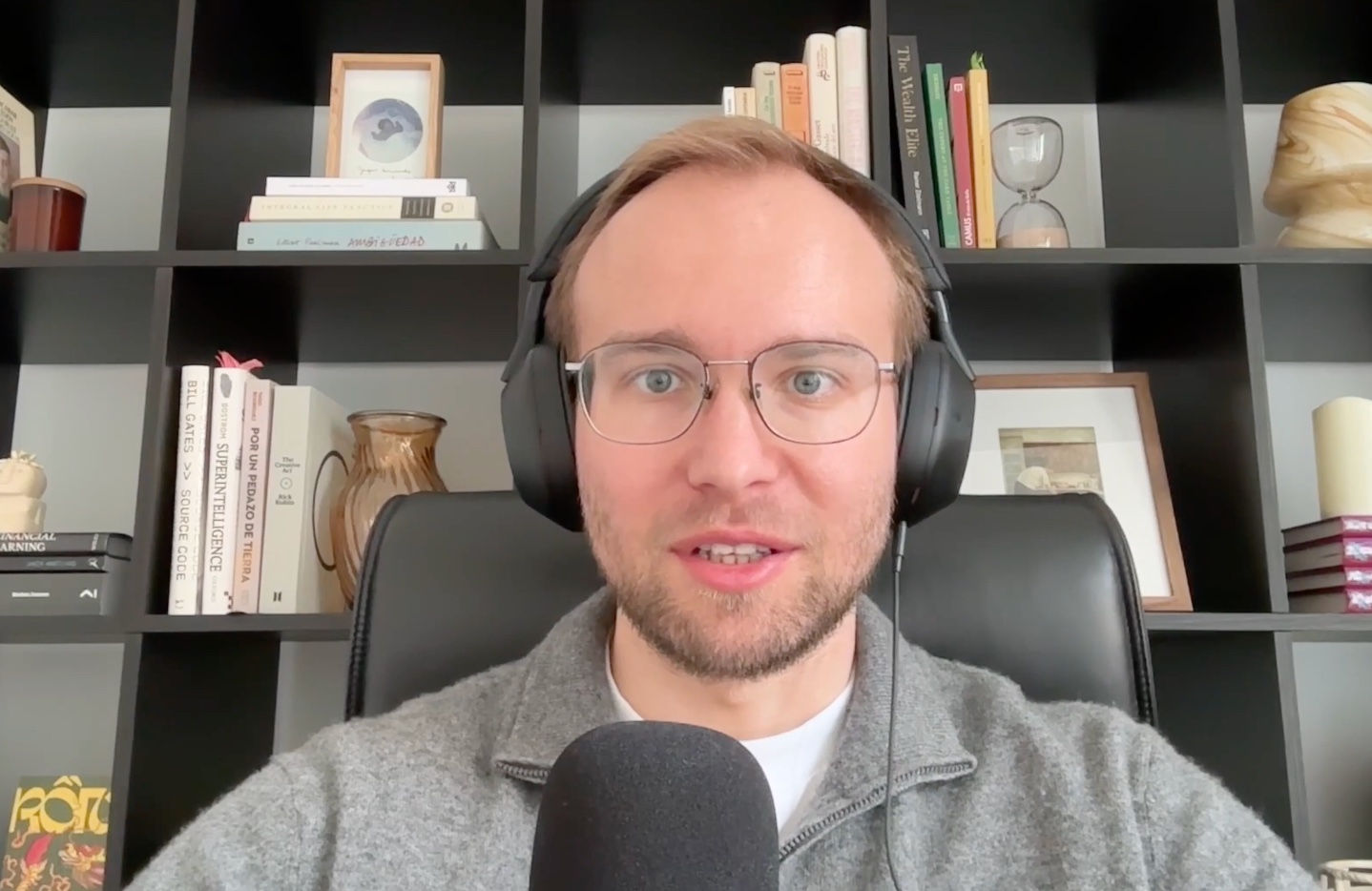
Alex Honchar
Co-Founder & CTO, Neurons Lab
Show Notes
What You'll Learn
- How to connect Garmin, Oura, Withings and Yazio to Claude using MCP (Model Context Protocol)
- How to query all your health data in plain English, from "what was my last meal?" to "how does my diet affect my sleep?"
- Why generating dashboards on demand beats building and maintaining one
- How credentials stay secure with local MCP servers
- How to codify a repeated analysis into a reusable skill and schedule it to run daily, weekly or monthly
Timestamps
- 00:00 Cold open
- 00:32 Introduction and Alex's background in applied AI
- 01:25 The problem: your wearable data isn't connected to your AI
- 02:38 The setup: Garmin, Oura, Withings and Yazio connected via MCP
- 04:34 What is MCP? A plain-English explainer
- 06:37 Live demo: querying meals, workouts and sleep in natural language
- 10:56 Setting up your first connection (API keys and developer portals)
- 12:26 Security: why your credentials stay local with MCP
- 15:06 Cross-source analysis: how diet impacts sleep and performance
- 16:14 On-demand dashboards instead of maintained ones
- 17:32 The results: carbs, heavy eating days and sauna vs sleep quality
- 22:00 The top tip: be specific about what you ask for
- 23:01 Skills: codify your prompts, then schedule recurring analysis
- 26:04 Wrap-up and where to find Alex
Key Takeaways
- Connect the sources, then ask questions. Medical PDFs are easy to hand to an AI. The daily data from your wearables and apps isn't, until you wire it in via MCP. Once connected, Claude decides which source to query and answers in plain English.
- Cross-source correlation is where the insight lives. Diet in one app, sleep in another, training in a third. Alex's analysis found carbs had the strongest negative effect on his sleep, his worst nights followed his heaviest eating days, and sauna plus strength work preceded his best sleep.
- Dashboards on demand beat dashboards you maintain. Rather than building a tool you have to keep alive, ask for a visualisation when you want one. You trade a little speed for zero maintenance.
- You don't need to be a biohacker. Alex doesn't wear his ring every day or log every meal. Loosely structured, intermittent tracking still produced actionable analysis.
- Be specific, then codify it. "Visualise it" produces different results in different tools. Once you've refined a prompt that works, ask Claude to turn it into a reusable skill, then schedule it as a recurring task.
- Outside the US, MCP fills the Apple Health gap. With no single integration covering everything, connecting each device or app individually is the way in, and a written guide means Claude Code can do most of the setup for you.
Tools & Resources Mentioned
- Claude Code — the terminal-based agent Alex uses day to day
- Claude Cowork — the friendlier UI for the same workflows
- Garmin Connect — training, runs, heart rate, VO2 max
- Oura Ring — sleep, readiness, SpO2, stress (developer portal access token required)
- Withings — smart scale for weight and body composition (developer portal access token required)
- Yazio — meal and diet tracking
- Alex's step-by-step Medium guide and open-source skills marketplace — linked from the episode on YouTube
- Find Alex on LinkedIn and X for questions and requests
Disclaimers
- AI health analysis should complement, not replace, professional medical advice.
- Correlations in personal health data are indicative, not clinical findings.
Never Miss an Episode
Get new episodes and workflow breakdowns in your inbox.
Interviewed by
Will Read
Co-host